Starter
For a steady handful of projects.
$99/ month
Up to three distinct full analyses in each paid billing period.
Choose Starter in your workspaceFor home builders and project teams
Start from the current civil plans, reuse builder contacts, and confirm the project’s construction scope and common-plan context before preparing its Arkansas SWPPP.
Professional Workspace
Both plans include the same document workflow and scoped quality promise. Choose based on how often your team needs a full analysis.
For a steady handful of projects.
$99/ month
Up to three distinct full analyses in each paid billing period.
Choose Starter in your workspaceFor teams preparing SWPPPs regularly.
$199/ month
No monthly project-count cap. Each analysis still requires a separate project and plan authorization.
Choose High Volume in your workspaceSubscriptions renew monthly until canceled. Cancel through the billing portal to stop the next renewal; the already-paid period ordinarily remains available through its end. Initial plans do not include trials or mid-period plan changes.
Eligible projects include exception review at no additional charge. If the builder still cannot deliver an accurate SWPPP after review, the applicable monthly subscription charge is refunded under the terms and exclusions. Read the subscription terms.
Save the preparing firm and reusable builder profiles. Account setup and guided project drafts are free.
Subscribe before starting full plan analysis. Payment alone never starts a job or uses an analysis.
Upload the complete current PDF. Confirm extracted findings and answer the project questions the plans cannot decide.
Review the document, add supporting PDF appendices, and generate the controlling PDF and editable DOCX companion.
Production-format sample · no customer data
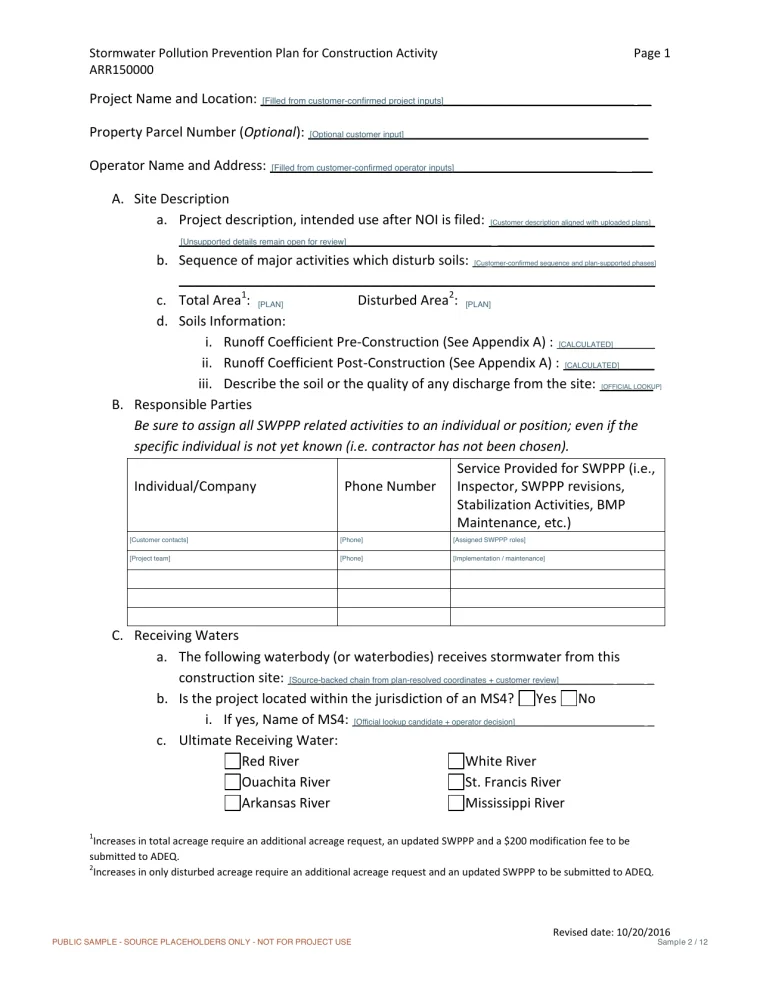
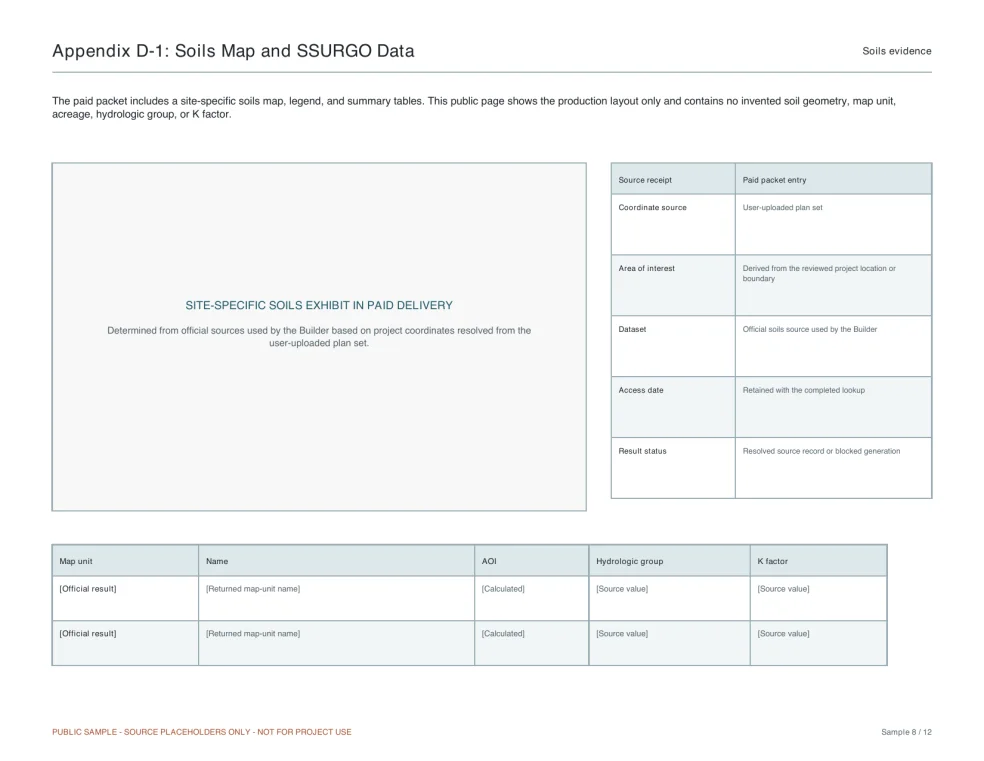
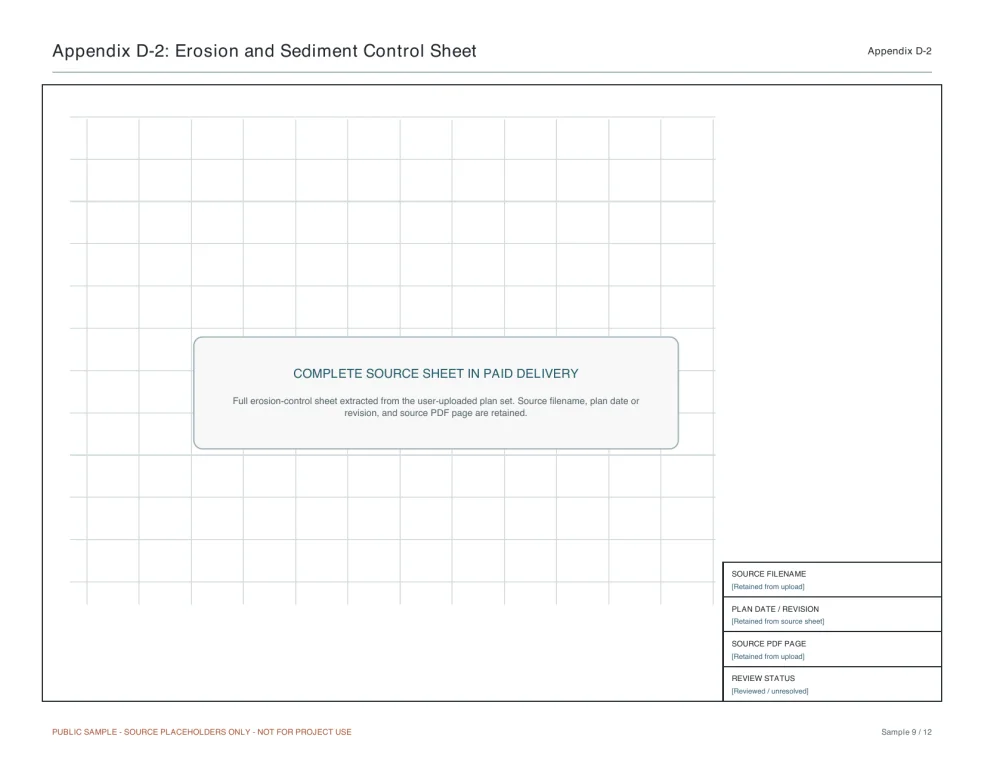
This 12-page public sample uses the same Arkansas state template and appendix structure as a paid Builder delivery. Project-specific entries are omitted or replaced with clear source placeholders showing what comes from your inputs, uploaded plan set, or official sources.
What fills the packet
Inside the delivered format
Exact pages from the public sample PDF
Swipe to inspect selected pages.
01
Project values are placed into the Arkansas template rather than recreated in a generic report.
02
Receiving-water and soils outputs retain the source context used to produce the project record.
03
Relevant plan sheets are preserved as complete pages with their source references, not reduced to summaries.
Selected public sample of the delivery format only. It is not a project SWPPP and is not for filing, certification, construction, inspection, or field use. Project facts, operator decisions, engineering design, signatures, and filing remain project-specific.
The subscription provides software-assisted preparation and exception review. Your firm reviews the packet and retains responsibility for design, eligibility, certifications, filings, and field implementation. Routine preparation labor and agency approval are not included.
Download and retain your files. Private plan uploads and generated files are scheduled for deletion after 30 days; saved document review data remains in your workspace.
Oklahoma and Missouri are in development and are not accepting subscriptions for those state workflows.